> For the complete documentation index, see [llms.txt](https://docs.discloud.com/llms.txt). Markdown versions of documentation pages are available by appending `.md` to page URLs; this page is available as [Markdown](https://docs.discloud.com/en/api-and-integrations/github-integration.md).
# GitHub Integration
Connect your GitHub repository to Discloud and deploy directly from your code.
### 🧭 Overview
The **GitHub Integration** allows you to deploy applications directly from a GitHub repository to Discloud, no manual ZIP uploads required. Discloud pulls the code from your repository, reads the [`discloud.config`](/en/configurations/discloud.config.md) at the root, and builds and starts your application automatically.
This is the recommended workflow for teams and anyone using version control as part of their development process.
***
### ✅ Prerequisites
Before connecting GitHub, make sure the following are in place:
{% hint style="success" %}
[**`discloud.config`**](/en/configurations/discloud.config.md) **at the root** - This file must exist at the root of your repository. Without it, the upload will fail validation. Learn more about the root of the project.
{% endhint %}
{% hint style="danger" %}
**Never commit** [**`.env`**](/en/faq/general-questions/.env-file.md) **files** - Your `.env` file must be listed in `.gitignore`. Production secrets are set directly in Discloud during the upload step, not through the repository.
{% endhint %}
***
### 🔗 Connect your GitHub account
{% stepper %}
{% step %}
**🔑 Open GitHub integration**
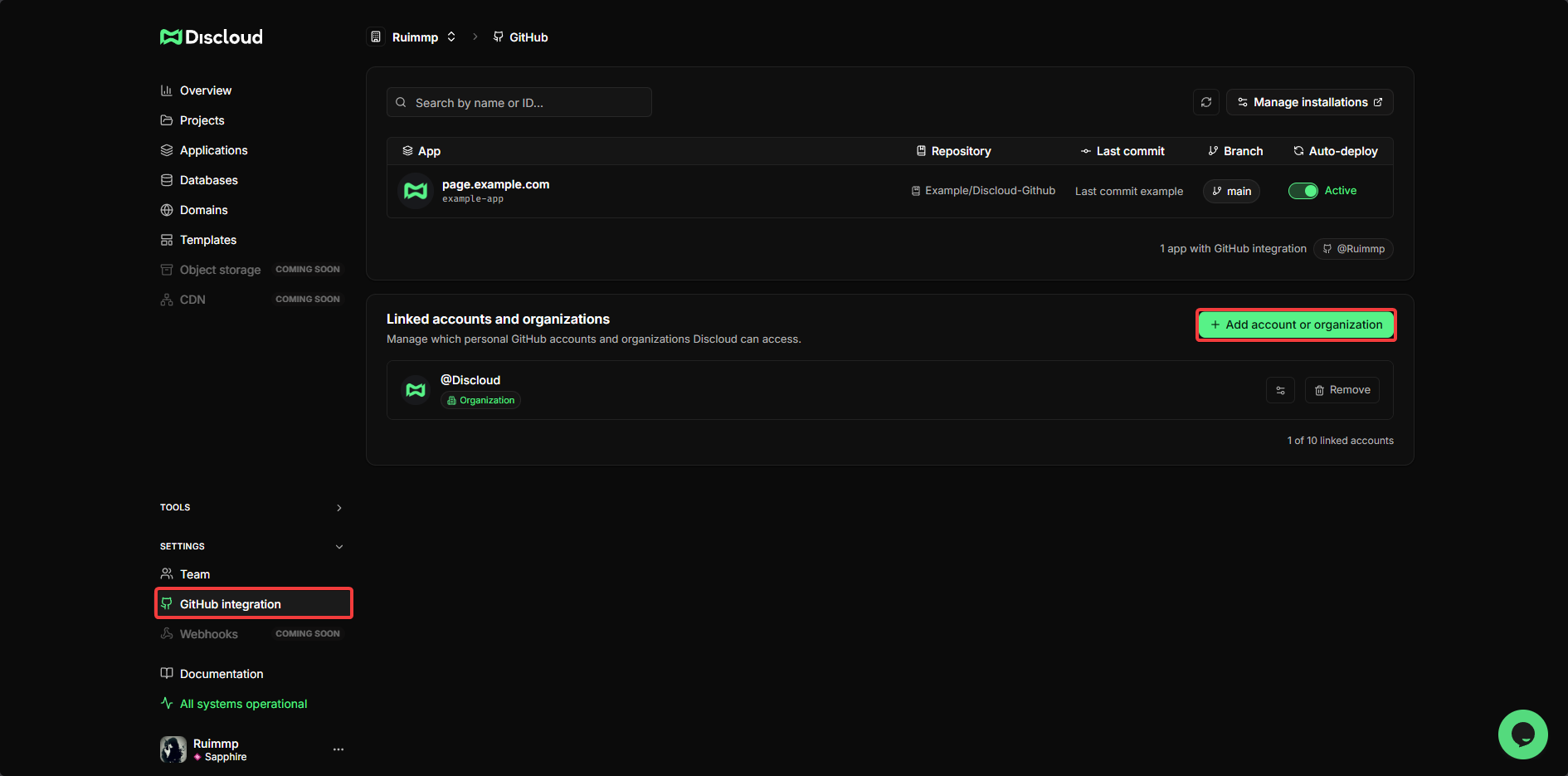
In the [Discloud Dashboard](https://discloud.com/dashboard), expand **Settings** in the left sidebar and click [**GitHub integration**](https://discloud.com/dashboard/github).
Click **+ Add account or organization** and follow the GitHub OAuth flow to authorize Discloud. This allows Discloud to read your repositories.
{% endstep %}
{% step %}
**⚙️ Configure repository access**
After authorizing, the connected accounts and organizations appear on the GitHub integration page. To manage which repositories Discloud can access, click **Manage installations** (top-right), this opens GitHub's app settings directly, where you can choose:
* 🔓 **All repositories** - Discloud can access every repository in your account
* 🔒 **Selected repositories** - Choose only the specific repositories you want to deploy
{% hint style="info" %}
You can change this at any time by returning to **Settings > GitHub integration** and clicking **Manage installations** again, or by managing the Discloud GitHub App directly from your GitHub account settings.
{% endhint %}
{% endstep %}
{% endstepper %}
***
### 🚀 Deploy from GitHub
{% stepper %}
{% step %}
**🚀 Start a new upload**
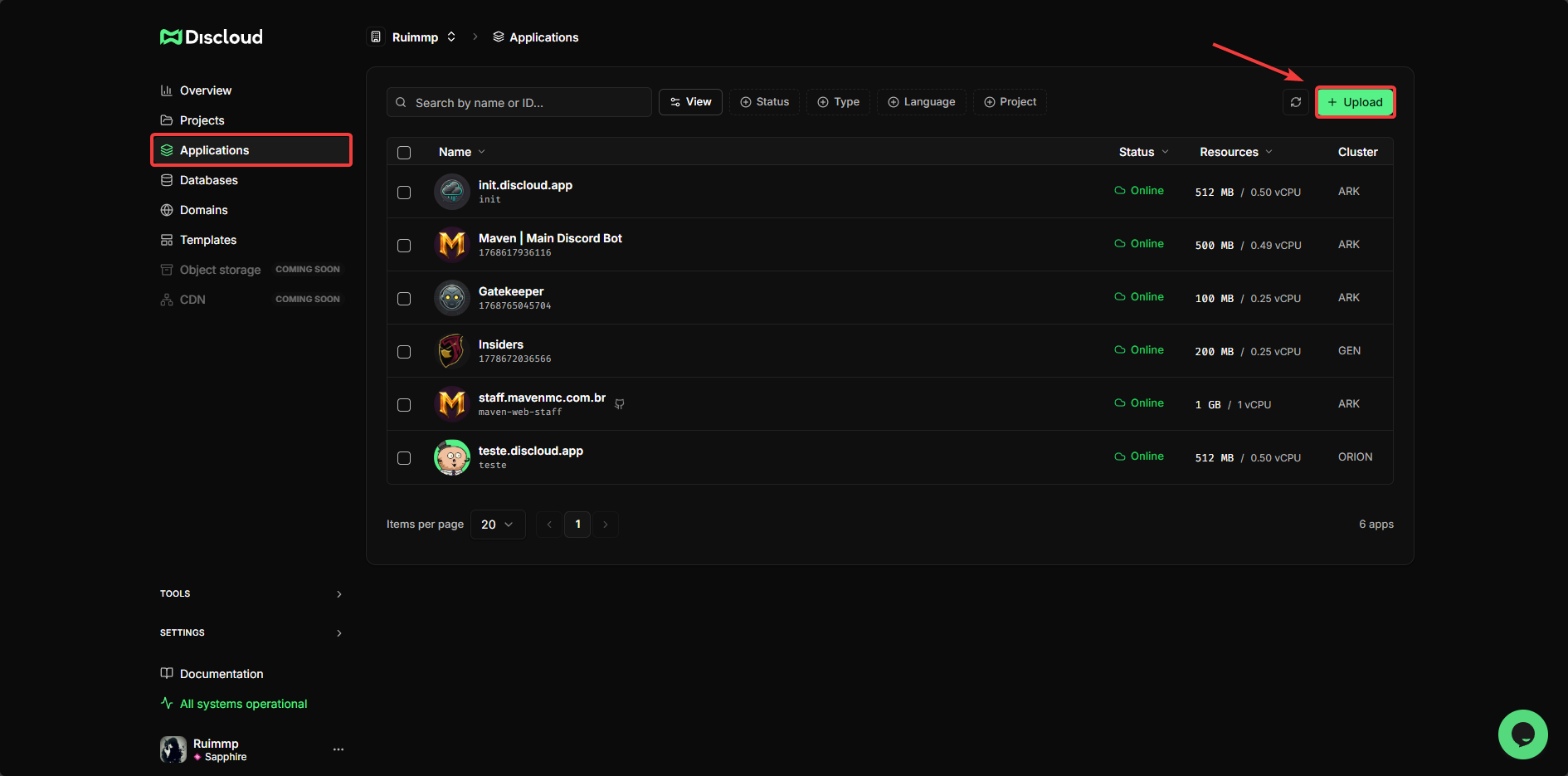
Go to the **Applications** page in the [Discloud Dashboard](https://discloud.com/dashboard), click **+ Upload** (top-right), and select **GitHub** as the deploy type.
{% endstep %}
{% step %}
**🛠️ Configure your deployment**
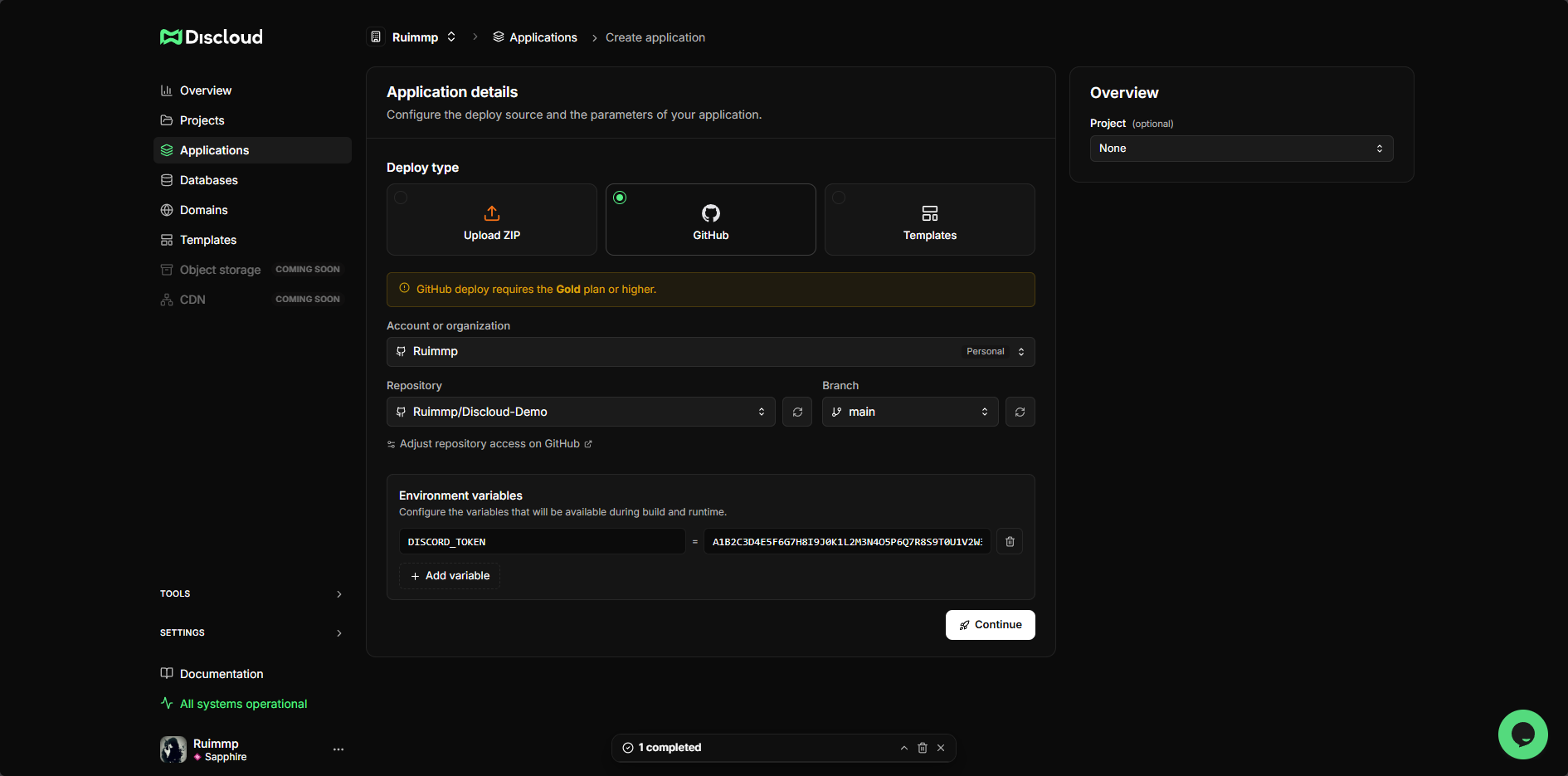
**Repository & branch** - Choose the repository and the branch you want to deploy from. Discloud will pull the latest commit from that branch.
**Environment variables** - Add your production secrets using the `NAME` / `value` fields.
{% hint style="danger" %}
**This is the only place to set production secrets.** `.env` files must not be committed to GitHub. Discloud stores these values securely and generates a `.env` file at the root of your application at runtime, keeping them out of your repository entirely.
{% endhint %}
{% hint style="warning" %}
If you forget to add a variable here, your application will start without it and may crash or behave incorrectly. To update environment variables later, you can edit them directly in the dashboard if you have a [paid plan](https://discloud.com/plans). Otherwise, you will need to do a new commit manually upload with the complete updated `.env` content.
{% endhint %}
{% endstep %}
{% step %}
**✅ Confirm and deploy**
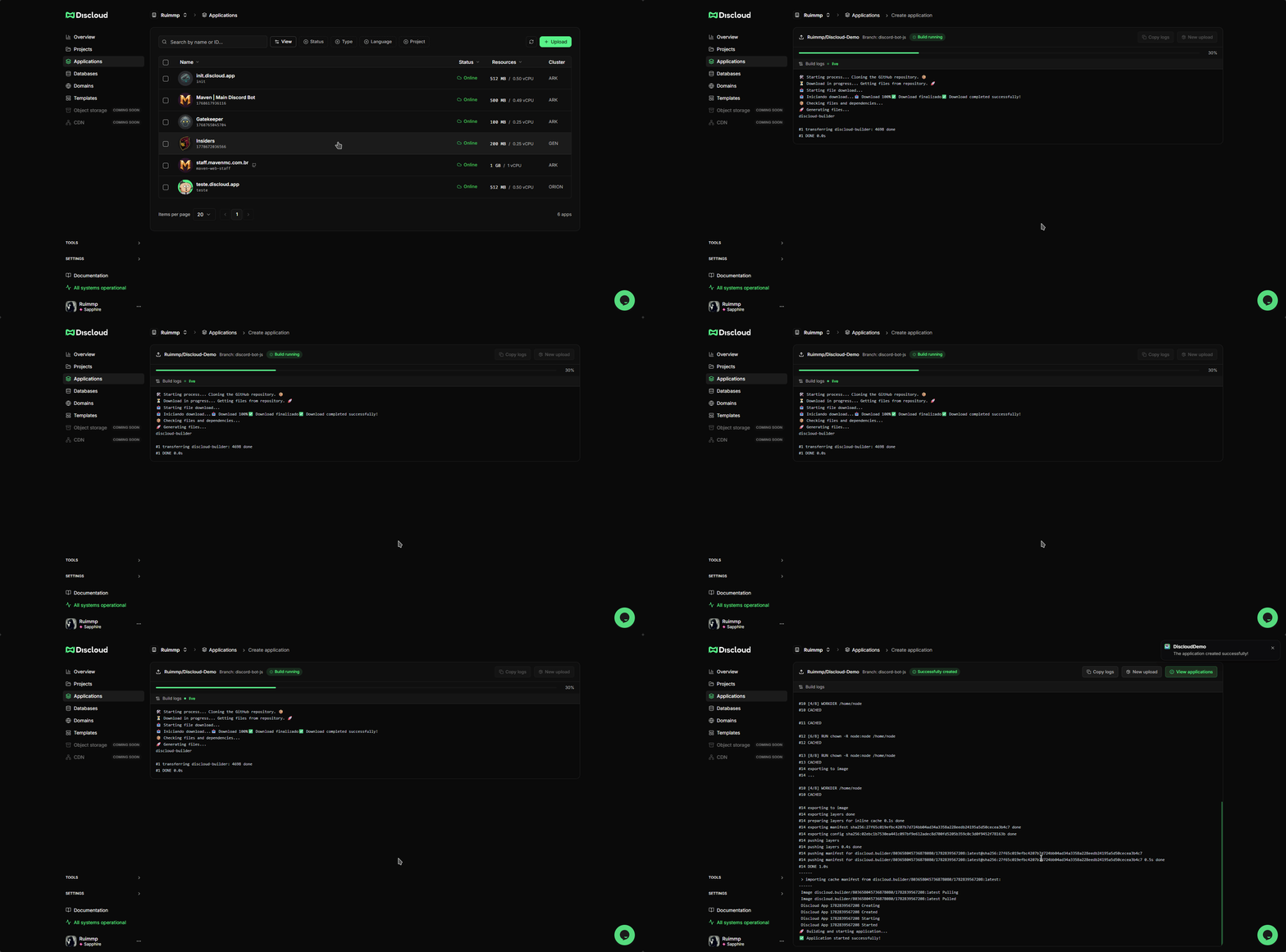
Review your settings and click **Continue**. Discloud will:
1. Pull the code from your selected repository and branch
2. Validate your `discloud.config`
3. Install dependencies and run the build command (if configured)
4. Start your application
{% endstep %}
{% endstepper %}
***
### 🔁 Updating your application
Discloud automatically redeploys your application whenever you push new commits to the branch configured during the initial upload. No manual action is required.