> For the complete documentation index, see [llms.txt](https://docs.discloud.com/llms.txt). Markdown versions of documentation pages are available by appending `.md` to page URLs; this page is available as [Markdown](https://docs.discloud.com/en/api-and-integrations/custom-domain.md).
# Custom Domain
Configure your domain for your Discloud hosted application.
## 🧭 Overview
You can map your own domain (e.g. `yourdomain.com`) or a subdomain (e.g. `dash.yourdomain.com`) to an application hosted on Discloud. The platform serves traffic through your app's [Discloud subdomain](/en/faq/general-questions/how-to-create-a-subdomain.md) using two A records pointing to our IPv4 addresses and validates ownership via TXT records.
***
## 📋 Requirements
{% hint style="success" %}
[Diamond plan or higher](https://discloud.com/plans) is required to host websites or APIs.
{% endhint %}
{% hint style="success" %}
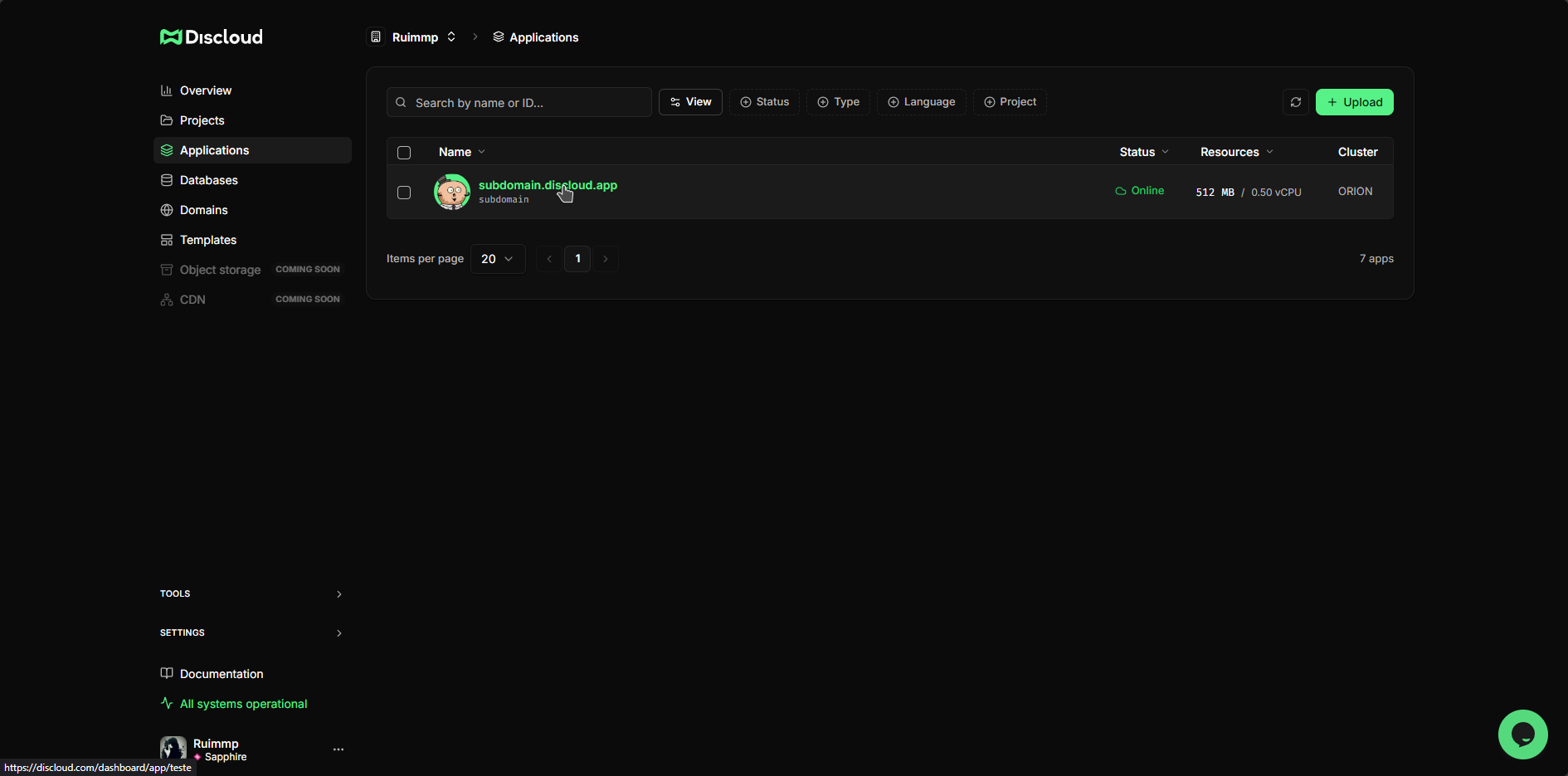
[App already hosted](/en/how-to-host/websites-and-apis.md) using a Discloud subdomain (e.g. `example.discloud.app`)
{% endhint %}
{% hint style="success" %}
A registered domain you control (Cloudflare, Hostinger, GoDaddy, Namecheap, etc.)
{% endhint %}
{% hint style="success" %}
Ability to add / modify A records
{% endhint %}
***
## 🏗️ Add Your Domain (Dashboard)
{% stepper %}
{% step %}
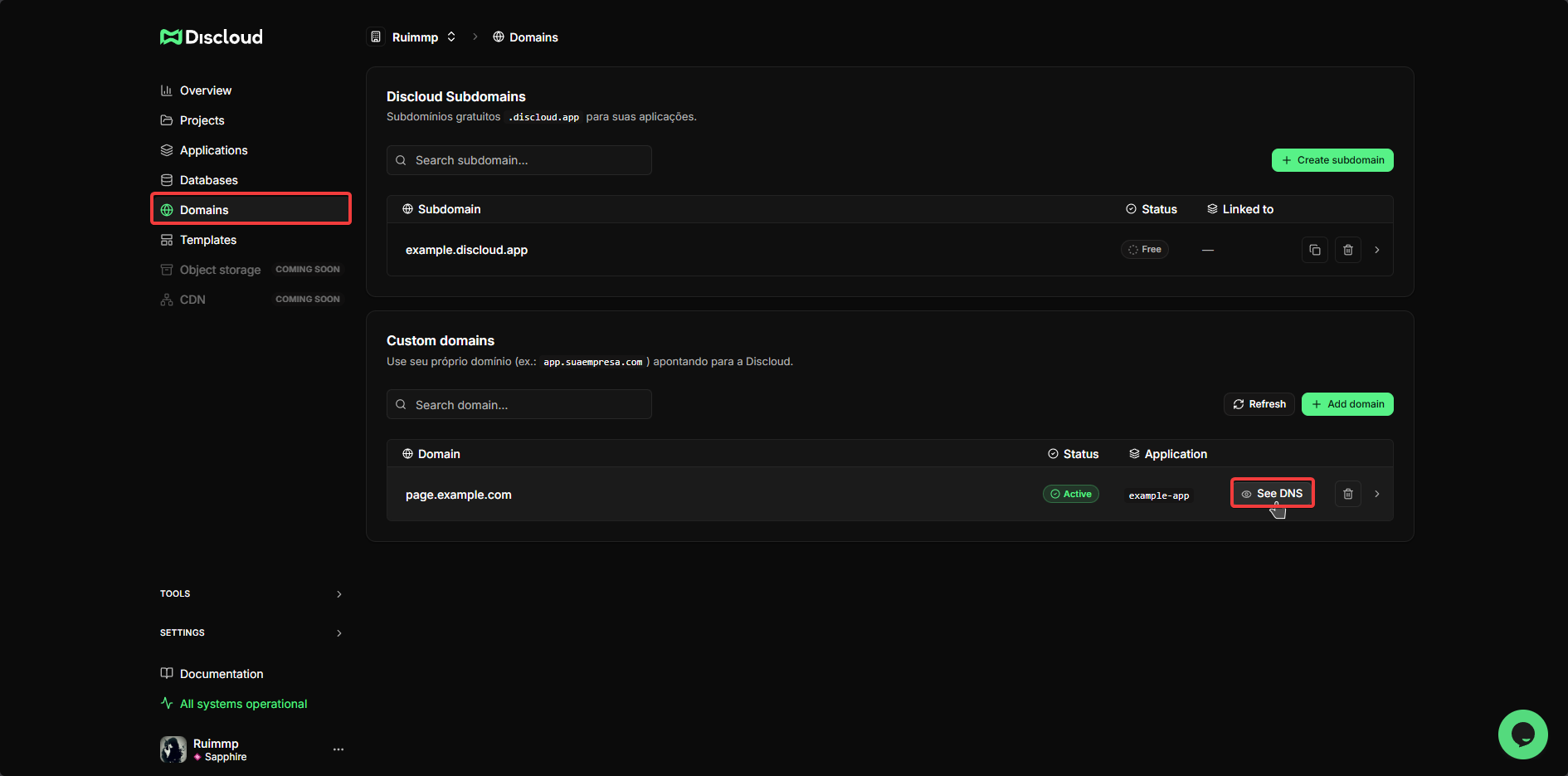
Open the [Discloud Dashboard](https://discloud.com/dashboard) → [`Domains`](https://discloud.com/dashboard/domains) section.
{% endstep %}
{% step %}
Enter your domain (e.g. `yourdomain.com`). Optionally specify a subdomain (e.g. `dash`).
{% endstep %}
{% step %}
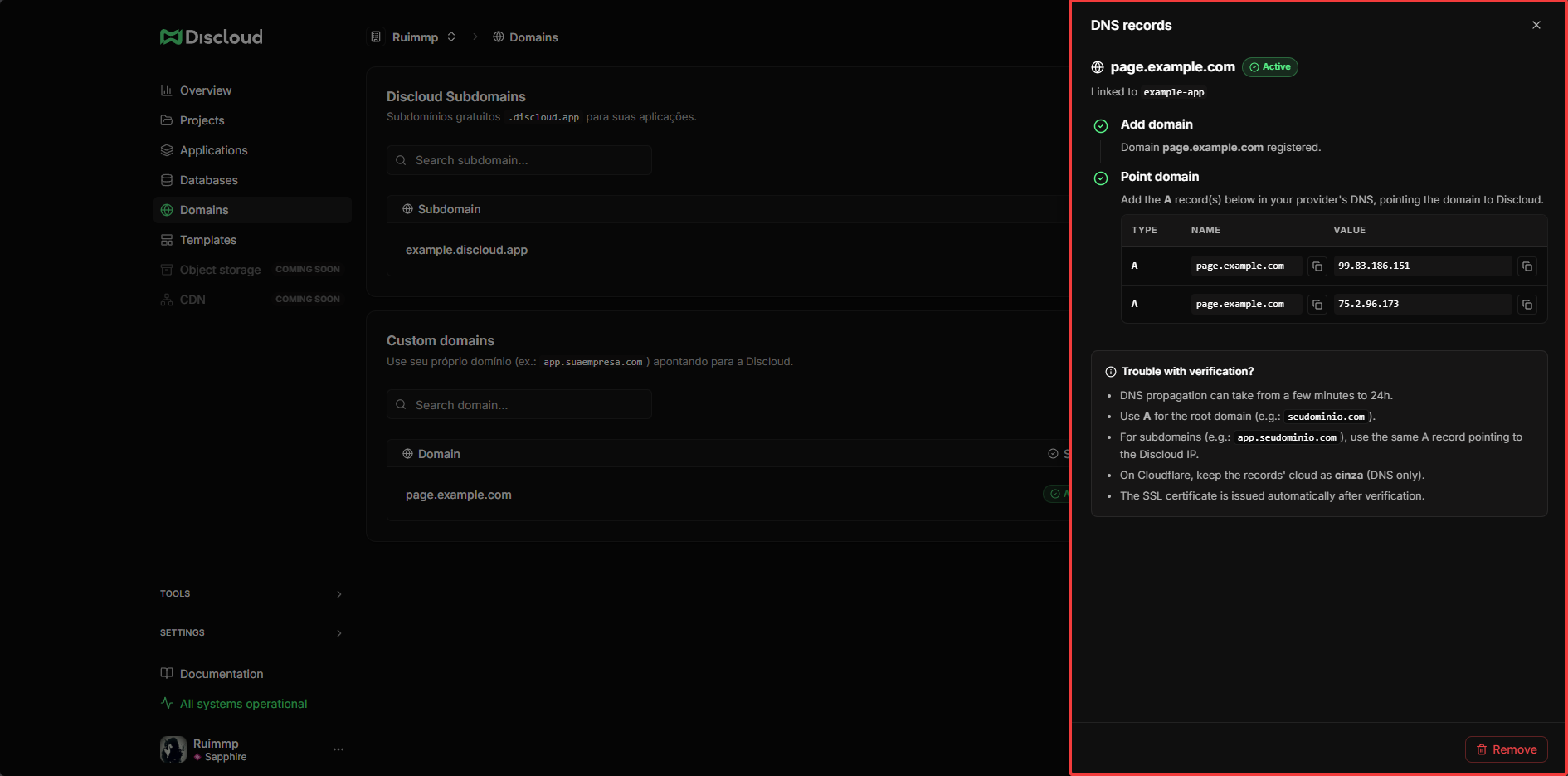
Click **+ Add domain**, enter your domain, then click **See DNS** to view the records you need to configure.
{% endstep %}
{% endstepper %}
***
## ✅ Verify & Configure DNS
Although any DNS provider works, below are tabbed scenarios for clarity.
{% tabs %}
{% tab title="Root Domain" %}
**Records**
| Type | Name | Value |
| ------------ | ---------------------- | --------------- |
| A | `@` (or provider root) | `75.2.96.173` |
| A | `@` (or provider root) | `99.83.186.151` |
| {% endtab %} | | |
{% tab title="Subdomain" %}
**Example: `dash.yourdomain.com`**
Type
Name
Value
A
dash
75.2.96.173
A
dash
99.83.186.151
Multiple subdomains (e.g. `api`, `app`) repeat this pattern independently.
{% endtab %}
{% endtabs %}
{% hint style="warning" %}
#### **Cloudflare Proxy**
If you use **Cloudflare**, it is mandatory to disable the **Proxy** (ensure it is set to **DNS Only** / **Grey Cloud**, not the Orange one). This ensures correct SSL certificate issuance.
{% endhint %}
***
## 🔄 Rebuild the App
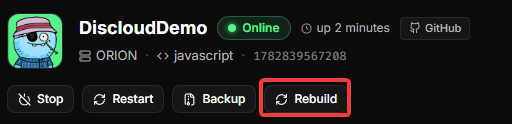
After DNS resolves and tokens validate, open the linked app and trigger Rebuild so the binding becomes active.
***
### 📡 **DNS Propagation**
* DNS changes typically propagate within a few minutes.
* However, **TTL values** and **resolver cache** may cause some delays.
* To verify changes worldwide, check [dnschecker.org](https://dnschecker.org/)
* If some POPs still display old records, wait and re-check later.